Leave Your Message

How to Choose an Aluminum Louvered Pergola?

Choosing an Aluminum Louvered Pergola involves more than matching a frame to your patio furniture. The right system should respond to your climate, daily habits, available space, and long-term maintenance expectations. A sunny terrace may need adjustable shade during midday heat, while a windy coastal garden requires careful attention to frame strength, finish quality, and installation methods.

Start with the pergola’s dimensions and louver operation. Measure the patio, nearby walls, drainage paths, and door clearances before comparing models. Louvers should open smoothly and close evenly without excessive noise. Check the aluminum grade, powder-coating process, hardware materials, and water-management design. Small details matter. A poorly positioned gutter can leave puddles beside a dining area. A weak motor may struggle after repeated exposure to dust or moisture.

Reliable selection also depends on the supplier and installer. Request clear specifications, maintenance instructions, warranty terms, and examples of completed projects. Independent product testing or recognized quality documentation can provide useful reassurance, though paperwork alone cannot replace careful inspection. Real-world performance varies between brands and installation conditions. No guide can predict every issue.

Think beyond appearance.

A refined pergola should feel stable, practical, and comfortable across changing seasons. Compare total ownership costs, including foundations, electrical work, cleaning, repairs, and possible drainage adjustments. An attractive low-priced option may become expensive when essential components are missing. With measured planning and honest evaluation, homeowners can choose an Aluminum Louvered Pergola that improves outdoor living without creating avoidable problems.
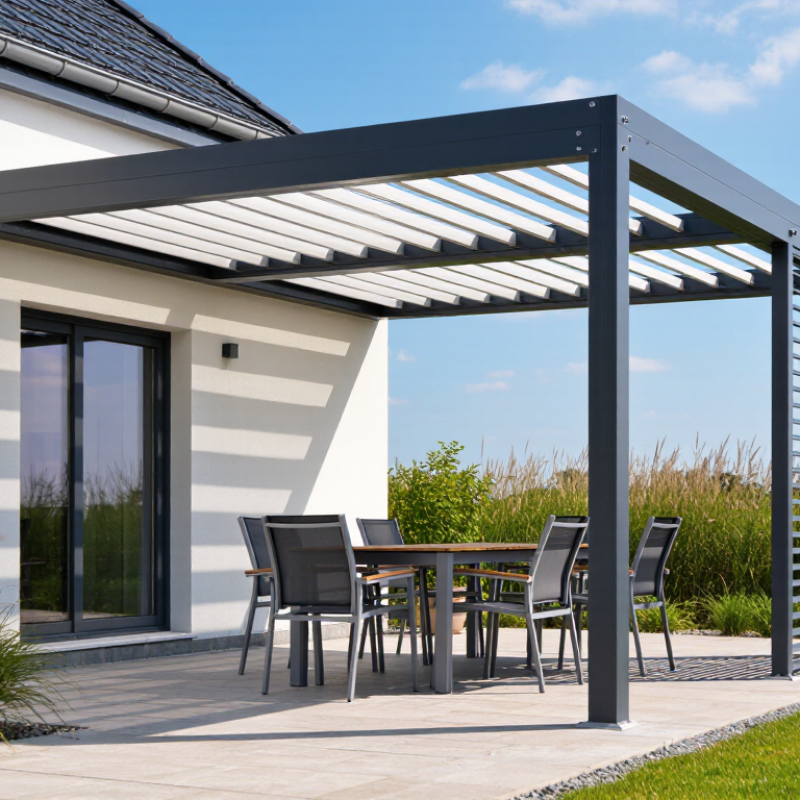
How to Choose an Aluminum Louvered Pergola?

Define Your Pergola’s Purpose, Location, and Available Space

How to Choose an Aluminum Louvered Pergola?

Before comparing designs, decide what the pergola must do. A dining area needs comfortable clearance for chairs and movement. A lounge space may require deeper shade and room for sofas. If you plan to cook outside, keep safe distance from walls, doors, and heat sources. Write down your daily uses. Otherwise, attractive features can distract from practical needs.

Location affects comfort more than many homeowners expect. Observe the area during morning, afternoon, and evening. Note the sun’s direction, prevailing wind, nearby trees, and water runoff. A pergola beside a west-facing wall may become very hot in late summer. One placed under branches may collect leaves and require frequent cleaning. I once made a rough layout that ignored a downspout. It looked correct on paper, but the drainage path became inconvenient. Measure the site twice.

Available space should include more than the pergola’s footprint. Leave enough room for opening doors, walking around furniture, and maintaining the structure. Mark the proposed corners with stakes or chalk. Then place temporary furniture inside the outline. This simple test often reveals cramped seating or blocked pathways. Check overhead clearance for lights, fans, and nearby branches. Also review local property rules before installation, since setback and permit requirements can vary. A smaller structure may work better than filling every open meter. You may need to compromise. That choice is easier when the pergola supports real habits instead of an idealized backyard scene.
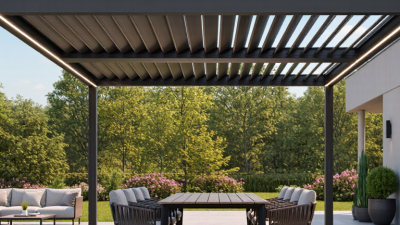
Compare Aluminum Grades, Coatings, and Structural Strength

Choosing an aluminum louvered pergola starts with the alloy, not the color chart. For residential frames, 6063 aluminum offers a clean finish and good corrosion resistance. It suits posts, louvers, and decorative sections. Heavier-load areas may benefit from 6061 or 6005A alloys. These grades generally provide higher strength. However, alloy names alone cannot prove performance. Ask for wall thickness, temper, and tested load data.

Coating quality matters in changing weather. Powder coating should include proper cleaning, pretreatment, and controlled curing. Otherwise, peeling may appear around cut edges or fasteners. Anodizing can provide a durable surface, but its color range is more limited. Near saltwater, inspect the pretreatment process carefully. Stainless fasteners and separated metals also help reduce galvanic corrosion. A small detail can become an expensive repair.

Structural strength depends on more than thick aluminum. Check the louver span, beam dimensions, post spacing, drainage design, and anchoring method. Wind uplift and snow loads should match the installation site. A qualified engineer can verify these calculations when spans are large or exposure is severe. In practice, installers sometimes focus on the roof and overlook the foundation. That is a mistake worth reconsidering.

Tips: Request alloy certificates, coating specifications, and load calculations. Inspect sample corners and drainage outlets before ordering. If the design looks unusually light, ask why.

Select the Right Louver System and Weather Control Features

Choosing an aluminum louvered pergola starts with your local weather, not the frame color. In coastal areas, salt-resistant finishes and stainless fasteners deserve close attention. For hot, sunny patios, adjustable louvers can reduce harsh glare while preserving airflow. A narrow blade pitch offers finer light control. Wider blades may create a stronger visual shade pattern. I have found that homeowners often focus on appearance first. That choice can become expensive later.

Select a louver system that matches how you use the space. Motorized blades suit frequent adjustments, especially during changing afternoon weather. A manual system may work well for a small, sheltered terrace. Check the opening and closing speed before installation. Slow movement can be frustrating during sudden rain. Look for a dependable rain sensor, but do not treat it as complete protection. Sensors need clean surfaces and reliable power. Add a manual override for outages. A thoughtful drainage channel should direct water away from seating and foundations. Ask how the structure handles wind, because closed louvers can act like a sail.

Your installer should verify anchoring, roof slope, local wind exposure, and expected snow load. These details affect safety and long-term performance. Aluminum resists rust, but it still needs seasonal cleaning. Rinse dust and salt from joints, hinges, and gutters. Inspect seals after severe storms. One weakness remains easy to overlook: weather control is never perfectly automatic. A sensor may react late, or rain may arrive sideways. Keep cushions movable. Leave room for human judgment.

How to Choose an Aluminum Louvered Pergola? - Select the Right Louver System and Weather Control Features

Selection Dimension Fixed Louver System Manual Adjustable System Motorized Adjustable System Motorized System with Weather Sensors
How It Works Louvers remain at one fixed angle and provide permanent shade or rain redirection. A hand-operated crank, lever, or similar mechanism changes the louver angle. An electric actuator adjusts the louvers using a wall switch, remote, or mobile control. Motorized louvers operate through user controls and can respond automatically to selected weather conditions.
Best For Simple shade structures, walkways, and areas where the desired roof position rarely changes. Small residential areas where occasional adjustment is needed and electrical wiring is undesirable. Patios, restaurants, and outdoor living areas requiring convenient daily adjustment. Spaces that need frequent weather response, remote operation, or integration with a wider outdoor-control system.
Light Control Limited. Daylight and shade levels are determined by the installed louver angle. Good. Users can manually adjust the opening to control sunlight and glare. Very good. Louvers can be adjusted from open to closed positions when required. Very good. Automatic settings may help maintain a preferred light level, subject to the control system.
Rain Protection Provides directional rain deflection but cannot adapt to changing wind or rain conditions. Louvers can be closed manually to reduce direct rain entry, provided the design includes suitable seals and drainage. Louvers can be closed quickly when rain begins; performance depends on the roof design, seals, gutters, and installation. A rain sensor can trigger closure, but it cannot prevent water entry before detection or during wind-driven rain.
Ventilation Control Permanent ventilation depends on the fixed louver spacing and angle. Users can open or close the louvers to balance airflow and shade. Offers precise adjustment between ventilation and enclosure without manual effort. Can be configured to close during rain and reopen afterward, although automation settings should be customized for the site.
Typical Louver Adjustment One factory-set position; the exact angle varies by roof design. Usually adjustable across a broad partial-to-full opening range, depending on the hardware. Usually adjustable across a broad partial-to-full opening range, depending on the motor and louver geometry. Usually adjustable across a broad partial-to-full opening range, with automatic positioning available on compatible systems.
Operation During Power Loss Unaffected because no motor is required. Unaffected because adjustment is manual. Louvers normally remain in their last position unless a manual override or backup power option is provided. Automatic weather response is unavailable during a power or control-system failure unless backup power is installed.
Wind Management Requires a fixed design suitable for local wind exposure; it cannot open or close in response to wind. Users can reduce wind pressure by changing the louver position, but adjustment must be made manually. May include a wind sensor or programmed position, but the structure still requires proper engineering and anchoring. Can support automatic wind-response settings when a compatible wind sensor and control system are installed.
Snow and Ice Considerations Must be selected and engineered for the expected local snow and ice loads. Requires the same structural assessment; manual operation should not be forced when louvers are frozen or obstructed. Requires structural assessment and protection against motor overload caused by snow, ice, or debris. Weather sensors do not replace snow-load engineering or safe winter operating procedures.
Drainage Requirements Gutters and downspouts may be needed to direct water away from the perimeter. Integrated channels and properly aligned seals help carry water toward the posts. Requires coordinated louver seals, internal drainage channels, gutters, and downspouts. Uses the same physical drainage components as a motorized system; sensors only manage operation and do not replace drainage.
Control Options None after installation. Manual handle, crank, or lever. Wall control, remote control, or compatible smart-home integration. Wall control, remote control, app control, rain sensor, wind sensor, temperature sensor, or scheduled automation.
Installation Complexity Low to moderate; fewer moving and electrical components are required. Moderate; the manual mechanism must be aligned and accessible. Moderate to high; electrical supply, motor alignment, wiring, and weather protection are required. High; installation includes electrical work, controls, sensors, calibration, and drainage coordination.
Maintenance Focus Clean louvers, inspect fasteners, and keep drainage paths clear. Perform the same inspections and periodically check the crank, hinges, and moving joints. Inspect motors, wiring, seals, hinges, and drainage channels; remove leaves and debris regularly. Maintain all motorized components and periodically test sensor accuracy, control connectivity, and automatic responses.
Energy and Comfort Benefits Provides predictable shade but cannot adapt to changing sun angles or ventilation needs. Can reduce direct solar gain when adjusted correctly, with no operating electricity. Allows convenient adjustment to improve shade, airflow, and outdoor comfort throughout the day. Can respond to changing conditions automatically, helping maintain comfort without constant user input.
Recommended Choice Choose when low complexity and a stable roof position are more important than flexibility. Choose for smaller installations where occasional adjustment and no electrical connection are preferred. Choose when convenience, frequent adjustment, and reliable rain response are priorities. Choose when the project requires automated weather response, remote access, or smart-control integration.

Note: Actual wind resistance, snow-load capacity, water performance, louver angle, and sensor functions vary by structural design, dimensions, installation method, local building requirements, and site conditions. Always verify the engineered specifications before purchase or installation.

Evaluate Dimensions, Installation Requirements, and Maintenance Needs

Choosing an aluminum louvered pergola starts with measurements, not color. Record patio length, projection, finished height, drainage paths, and door swings. Measure twice.

ASCE 7-22 uses site-specific wind speeds and snow loads, so identical pergolas may need different structures. Ask an engineer to verify beam spans, post spacing, anchoring, and louver orientation. The Aluminum Association’s Aluminum Design Manual identifies 6061-T6 aluminum with a minimum yield strength near 35 ksi. However, many pergola components use different alloys, so never assume equal strength. A 3.6-meter-wide frame may require additional bracing in exposed locations. Catalog proportions are not engineering evidence.

Installation begins with the substrate. Concrete, pavers, and soil require different anchoring methods. Check slab thickness before drilling, and keep fasteners away from weak edges. Confirm local permits, electrical clearances, and drainage rules before delivery. A slightly uneven patio can prevent louvers from closing properly. I have seen installation plans overlook this detail. It is frustrating and avoidable.

Maintenance needs should influence the finish and roof design. AAMA 2605 coating requirements include 5,000 hours of accelerated weathering and 4,000 hours of humidity testing. These tests indicate durability, not immunity. Rinse exposed surfaces with clean water, especially near coastal salt, and inspect hinges, seals, and drains twice yearly. Remove leaves before they harden into compacted debris. Maintenance is modest, not zero. Allow service access around motors and gutters, even when the finished design looks cleaner without it.

Review Safety Standards, Custom Options, Warranty, and Total Cost

How to Choose an Aluminum Louvered Pergola?

Safety should guide every pergola decision. Ask for documented wind, snow, and load ratings. Confirm that the design follows local building requirements. Check whether permits are needed before installation. Inspect the aluminum thickness, connection points, drainage channels, and motor protection. A sturdy frame should not depend on vague promises.

Tips: Request technical drawings and installation instructions. Ask who handles structural calculations. Confirm electrical components have suitable safety certifications. Also, examine the warranty carefully. It should state coverage periods for the frame, coating, louvers, motor, and hardware. Some warranties exclude poor installation, coastal exposure, or unauthorized modifications. Read the exclusions twice. They matter.

Customization affects both comfort and cost. Consider louver size, color, integrated lighting, screens, heaters, sensors, and rainwater drainage. Measure the patio carefully, including door swings and nearby trees. A small mistake can create expensive adjustments. Calculate the total cost, not only the advertised structure price. Include foundations, permits, delivery, assembly, electrical work, drainage, and future maintenance. I once underestimated installation access, and the final budget changed noticeably. That was a useful reminder. A clear written quotation should separate every charge and identify possible site risks. Reliable suppliers explain limitations instead of promising perfection.