Leave Your Message

What Is the Best Retracting Roof Pergola from China?

Choosing the best Retracting Roof Pergola from China requires more than comparing prices and attractive product photos. A reliable evaluation should examine roof movement, aluminum quality, drainage, motor performance, wind resistance, customization, and after-sales support. These details determine whether the pergola remains useful after years of changing weather.

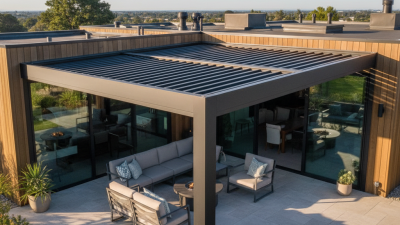
Randy H. Traver, an outdoor-living product specialist, once said, “A pergola should extend comfort, not create another maintenance problem.” That principle is worth remembering. A well-designed Retracting Roof Pergola should open smoothly under bright sunlight, close securely before rain, and guide water away through concealed gutters. Its louvers or fabric roof should move without harsh vibration. Small details matter.

China offers a wide range of manufacturers. Some provide strong engineering, tested finishes, and dependable automation. Others mainly compete through low prices. The difference may be hidden inside the frame, where fasteners, seals, motors, and drainage channels are difficult to inspect. This is where buyers need patience.

The best option is rarely the cheapest one.

A sensible comparison should request technical drawings, material specifications, installation guidance, warranty terms, and real project references. Buyers should also confirm whether replacement motors and controls are available. A beautiful showroom model can still disappoint if support is slow or unclear.

This guide compares the practical strengths and weaknesses of Chinese Retracting Roof Pergola suppliers. It also considers regional climate, installation conditions, operating noise, and long-term maintenance. No product is perfect. That is an important limitation. The right choice depends on how the space will actually be used.

What Is the Best Retracting Roof Pergola from China?

What Defines the Best Retracting Roof Pergola from China?

The best retracting roof pergola from China is not defined by appearance alone. It is defined by verified performance, precise manufacturing, and suitability for the installation site. A 2024 Research and Markets assessment expects the global pergola market to grow at roughly 5% annually through 2030. This growth reflects stronger demand for outdoor comfort, but it also raises quality expectations.

In practical use, the roof should open smoothly after repeated cycles, without grinding sounds or uneven movement. Powder-coated aluminum needs consistent coverage, especially around corners and drainage channels. The frame should be engineered for local wind and snow loads, not copied from a standard drawing. ASTM E330 testing can help verify structural resistance under controlled air pressure. EN 13561 testing is also useful for evaluating retractable outdoor shading products, although it does not replace local building requirements.

Water management often reveals the real quality. During heavy rain, integrated gutters should guide water toward visible downspouts, not across the seating area. Seals must remain flexible after heat, cold, and ultraviolet exposure. Supplier reliability matters too. ISO 9001 certification supports process control, but it does not guarantee every finished pergola is excellent. Request inspection records, material certificates, cycle-testing results, and installation guidance. Ask difficult questions. The word “best” is slippery, and a visually perfect roof can still fail when drainage, wind exposure, or maintenance planning is ignored.

How Chinese Retracting Roof Pergolas Differ by Design and Operation

What Is the Best Retracting Roof Pergola from China?

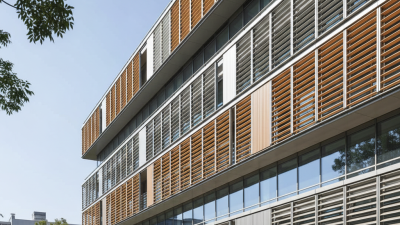
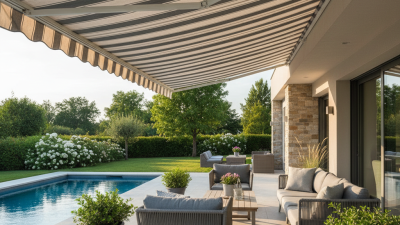
Chinese retracting roof pergolas differ mainly in roof design and operating method. Some use sliding fabric panels, while others use rotating aluminum louvers. Fabric systems create softer shade and retract quickly. Louvers offer better rain control, but their motors and drainage channels need closer inspection. A well-designed roof should guide water toward concealed gutters, not onto furniture or walkways.

Operation also varies. Basic models use wall switches or remote controls. More advanced systems add rain, wind, and temperature sensors. These features improve convenience, but they can fail without correct calibration. Manual override is valuable during power interruptions. In practical site reviews, I check motor noise, panel alignment, drainage speed, and frame stability. A beautiful structure is not automatically a reliable one. I once underestimated the importance of access panels; difficult maintenance later became expensive and frustrating.

Tips: Ask for roof-cycle testing before purchase. Open and close the roof repeatedly. Check whether water drains evenly after spraying. Confirm the aluminum thickness, coating process, motor protection rating, and replacement-part availability. Request installation drawings and a clear warranty document. Local weather matters, too. A coastal project needs stronger corrosion resistance, while a snowy region may require reinforced load calculations. Supplier photographs can help, but physical samples reveal more. Small details matter.

Retracting roof pergolas from China vary mainly by roof mechanism. Fabric systems usually open fastest, while sliding, folding, and rotating-louver designs require more time because they move heavier or more complex roof components. The ranges show typical full-open operating times for common non-brand product configurations.

Which Materials and Features Matter Most for Long-Term Performance?

What Is the Best Retracting Roof Pergola from China?

Long-term performance begins with the roof material, not the motor. Powder-coated aluminum resists rust, stays light, and reduces load on wall connections. A 2023 Grand View Research report valued the global outdoor furniture market at about USD 19.5 billion in 2022, with continued growth through 2030. That demand encourages cheaper finishes. Inspect carefully.

For the retracting roof, laminated PVC fabric can block rain and sunlight while folding neatly. However, fabric quality varies sharply. Look for UV resistance, welded seams, and a stated water-pressure rating. Solid aluminum louvers offer stronger weather protection, but they need accurate drainage channels. Small gaps become noisy during heavy rain. A practical test is simple: spray the closed roof for twenty minutes, then inspect every joint and gutter.

The frame should use corrosion-resistant aluminum, stainless fasteners, and replaceable seals. Motorized systems need manual override, limit protection, and drainage-safe wiring. Wind resistance must follow local structural requirements, including ASCE 7 load calculations where applicable. The 2024 NOAA climate report showed that extreme weather continues to challenge outdoor structures across many regions. A pergola rated only for calm conditions is not a dependable investment. I would also request cycle testing, maintenance instructions, and independent inspection records. Marketing specifications can look impressive. Real installation errors still happen.

How to Compare Chinese Manufacturers, Prices, and Customization Options?

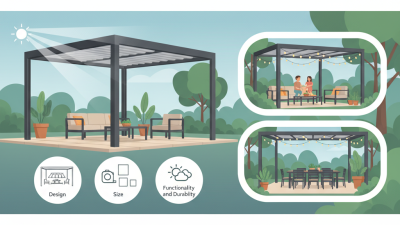
Choosing the best retractable roof pergola from China requires more than comparing online prices. I would examine the manufacturer’s factory experience, engineering team, and quality records. Ask for project photos with measurable details, such as roof span, aluminum thickness, and drainage design. A reliable supplier should provide load calculations, material specifications, and test reports without hesitation.

Price comparisons become meaningful only when quotations list the same features. Check the motor system, fabric or louver material, powder coating, gutters, packaging, and spare parts. Confirm whether the price includes tooling, delivery, installation guidance, and import-related charges. A low quote may exclude important items. It can look attractive at first.

Customization should cover roof size, column placement, colors, lighting, screens, and rainwater outlets. Send accurate site drawings, because small measurement errors can affect installation. Ask how design changes are approved and recorded. I have seen projects delayed when verbal promises replaced written specifications. That mistake is avoidable, though even careful buyers should leave time for revisions. Confirm local wind and snow requirements before production. Request a sample finish or hardware piece when possible. It reveals surface quality better than photographs.

What Should Buyers Verify Before Ordering and Installing a Pergola?

What Is the Best Retracting Roof Pergola from China?

Before ordering a retracting roof pergola, verify its performance, not just its appearance. Ask for aluminum alloy grades, coating details, and corrosion-resistance test results. Request technical drawings showing beam sizes, column thickness, drainage paths, and connection points. Product photos can hide weak joints.

Check the roof’s wind, rain, and snow ratings for your actual location. These figures should come from documented testing, not casual sales claims. Confirm the operating method, motor voltage, noise level, and manual backup system. A power outage should not leave the roof half open. Also measure the installation area carefully. A difference of two centimeters can affect drainage and wall clearance.

Do not overlook packaging and after-sales support. Ask how each frame is protected during shipping, and request a complete parts list before payment. Confirm warranty coverage, replacement-part availability, and the installer’s responsibilities. Local building requirements may also affect foundations, electrical work, and permits. Get these details in writing.

Small mistakes become expensive. A drain placed above a doorway can create daily trouble. An attractive quotation may exclude anchoring hardware or site preparation. Buyers should compare the full installed cost, not the headline price. Independent inspection is useful when drawings seem unclear, even if the supplier appears experienced.

What Is the Best Retracting Roof Pergola from China? What Should Buyers Verify Before Ordering and Installing a Pergola?
Data Dimension What Buyers Should Verify Factual Reference or Practical Benchmark Evidence to Request Before Ordering
Roof Configuration Required
Confirm whether the roof is fully retractable, louvered, fabric-based, or a hybrid system.
A retractable louvered roof uses rotating aluminum slats and can provide adjustable shade and rain protection. A sliding fabric roof generally provides shade but may require separate drainage and weather limitations. Request roof-section drawings, open and closed positions, drainage details, and the maximum recommended operating conditions.
Overall Dimensions Required
Check maximum bay width, projection, height, post spacing, and allowable dimensional tolerances.
Many residential systems are modular, but the maximum unsupported span depends on profile size, roof weight, wind exposure, and local structural requirements. There is no universal safe span. Provide the supplier with a dimensioned site plan and require a project-specific layout rather than relying on a standard product image.
Structural Material Required
Verify the alloy designation, temper, wall thickness, reinforcement, fasteners, and connection design.
6063-T5 or 6063-T6 aluminum is commonly used for architectural extrusions, but alloy designation alone does not prove structural suitability. Posts, beams, brackets, and joints must be assessed as a complete system. Request material certificates, profile cross-sections, wall-thickness data, connection drawings, and a bill of materials.
Wind Resistance Required
Confirm the design wind speed, exposure category, roof-open operating rule, and anchoring method for the installation site.
Wind resistance is site-specific and depends on local code, building exposure, roof position, dimensions, and anchorage. A generic wind claim without a test method or calculation is not sufficient. Request a signed structural calculation or test report stating the applicable standard, test conditions, wind speed, and failure criteria.
Snow and Static Load Required
Verify whether the system is designed for snow load, maintenance load, water accumulation, or only mild-climate use.
Snow-load requirements vary by location and altitude. A roof designed for rain protection is not automatically suitable for snow or prolonged standing water. Supply the project snow-load value and obtain written confirmation of the supported load, drainage assumptions, and snow-removal requirements.
Drainage Performance Required
Inspect roof channels, internal gutters, downpipes, outlet positions, overflow paths, and connection seals.
A functional rainwater system should direct water from the roof into gutters and downpipes without relying solely on surface sealant. Outlet capacity must match the local rainfall intensity and roof area. Request a drainage diagram, water-flow test video, gutter dimensions, outlet size, and instructions for clearing debris.
Motor and Controls Recommended
Verify voltage, frequency, motor duty cycle, manual override, control method, limit adjustment, and replacement availability.
Common supply options include 220–240 V AC at 50 Hz and 110–120 V AC at 60 Hz, depending on the destination market. The supplied motor must match the local electrical system. Request the motor data plate, wiring diagram, control instructions, emergency operation method, and spare-parts list.
Electrical Protection Required
Check outdoor protection, cable routing, grounding, residual-current protection, and the enclosure rating of exposed components.
IP ratings are defined by IEC 60529. For example, IP65 indicates dust-tight protection and protection against water jets; it does not mean that a component is suitable for immersion or every installation condition. Request component-level IP test information and have final electrical connections completed by a qualified electrician under local regulations.
Weather Sensors Recommended
Confirm whether rain, wind, sun, temperature, or obstacle sensors are included and how they affect automatic movement.
A wind sensor can automatically open or close a roof, but sensor placement, calibration, power supply, and control compatibility determine its effectiveness. Sensors do not replace structural design. Request the sensor operating range, response time, mounting instructions, factory settings, and manual override procedure.
Surface Finish Recommended
Verify powder-coating or anodizing process, color reference, coating thickness, pretreatment, and appearance tolerances.
Exterior powder coating should be specified by a recognized coating system or project requirement. Color samples should be evaluated under natural light because screen images are not reliable color references. Request a physical finish sample, coating specification, color code, inspection photos, and written criteria for scratches, gloss, and color variation.
Corrosion Resistance Required
Check fastener material, isolation between dissimilar metals, drainage of hollow profiles, and suitability for coastal or high-humidity environments.
Stainless-steel fasteners are often preferred outdoors, while marine or coastal locations may require higher corrosion resistance and more frequent maintenance. Aluminum and stainless steel should be properly isolated where galvanic corrosion is possible. Request the fastener grade, coastal-environment options, maintenance schedule, and written exclusions for salt exposure.
Water and Air Tightness Recommended
Verify the test method for rain leakage, roof-joint sealing, gasket material, and expected performance during wind-driven rain.
A pergola is normally an outdoor shade structure rather than a fully enclosed building envelope. Wind-driven rain can enter through moving joints even when the drainage system is correctly installed. Request a test report or demonstration under defined rainfall and wind conditions, plus clear wording on what level of weather protection is guaranteed.
Installation Base Required
Confirm whether the structure is fixed to concrete, steel, timber, masonry, or another substrate.
Anchor capacity depends on the substrate, edge distances, embedment depth, anchor type, and local loads. Product anchors cannot be selected safely without checking the actual base. Provide foundation photographs and dimensions, and request an anchoring plan with bolt size, spacing, embedment, and substrate assumptions.
Building Permits Required
Check planning, property-line, stormwater, electrical, and structural-permit requirements before production.
Permit requirements vary by country, municipality, structure size, attachment to a building, and local zoning rules. Supplier approval does not replace approval from the local authority. Confirm requirements with the local building department or a licensed professional and retain the approved drawings with the order documents.
Safety Features Required
Verify pinch-point protection, obstruction detection, emergency stop, manual release, and safe access for maintenance.
Motorized moving roofs can create crush and shear hazards. Safety devices must be compatible with the control system and tested after installation. Request the risk assessment, user manual, safety-device list, commissioning checklist, and instructions for isolating electrical power.
Quality Inspection Recommended
Inspect dimensions, coating, welds or castings, roof alignment, seals, drainage outlets, hardware, and motor operation before shipment.
Pre-shipment inspection should compare the finished unit with approved drawings and the purchase specification. Photographs alone are useful but do not replace dimensional and functional checks. Use an independent inspection service or an agreed inspection checklist with measurable acceptance criteria and documented corrective actions.
Packaging and Shipping Recommended
Verify crate dimensions, package weights, moisture protection, labeling, lifting points, and protection of coated surfaces.
Long aluminum profiles can be damaged by bending, impact, friction, or poor support during transport. Separate wrapping and rigid blocking help reduce surface and dimensional damage. Request a packing list, package photos, shipping dimensions, spare-component list, and a process for recording concealed transport damage.
Warranty Coverage Required
Separate structural, coating, motor, sensor, seal, and finish warranties and identify exclusions.
Warranty duration is less important than the exact covered components, remedy, response time, labor responsibility, and conditions for valid installation and maintenance. Request a signed warranty document stating the coverage period, claim procedure, excluded conditions, spare-parts support, and service contact.
Maintenance Requirements Good Practice
Confirm cleaning frequency, gutter inspection, fastener checks, lubrication requirements, fabric care, and winter or storm procedures.
Outdoor moving structures require periodic cleaning and inspection. Debris in gutters, blocked outlets, loose fasteners, and neglected seals can reduce service life and drainage performance. Obtain a maintenance schedule, illustrated service manual, recommended cleaning products, and a list of replaceable wear parts.
Buyer’s decision rule: The best retracting roof pergola is not determined by appearance or the lowest quoted price alone. Select the system that provides project-specific structural evidence, compatible electrical components, verified drainage, suitable anchoring, documented safety features, and clear after-sales support for the intended climate and installation site.