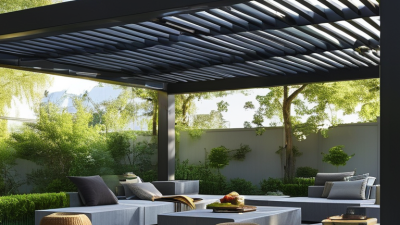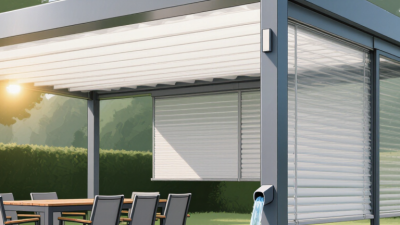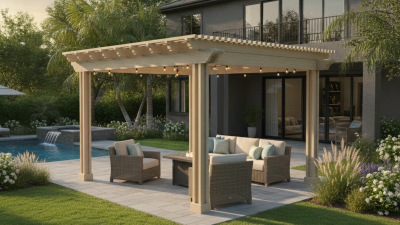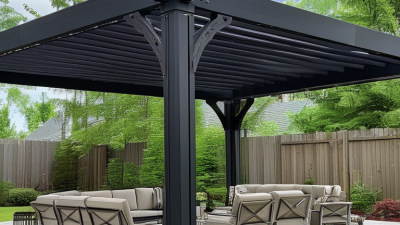
Choosing the right Aluminum Pergola supplier requires more than comparing attractive photographs and starting prices. This guide examines ten respected suppliers serving markets worldwide. It considers alloy quality, powder-coating performance, drainage design, engineering support, and installation standards. These details become visible during real use, especially beside a windy coastline or beneath heavy summer rain.
Outdoor-living specialist Randy Strawn, founder of StruXure, captures the purpose clearly: “Outdoor comfort should not depend on perfect weather.” His observation matters when evaluating louvered roofs, integrated lighting, screens, and motorized controls. A dependable supplier should explain the aluminum grade, coating process, load limits, spare-parts access, and warranty terms. Vague claims deserve careful questions. Very careful questions.
The suppliers in this overview are not judged by brand visibility alone. Their regional service networks, project experience, customization options, and documented testing also influence the comparison. Some companies excel at residential installations, while others support commercial developments and complex architectural projects. Price remains important, but the cheapest quotation can become expensive after shipping, foundation changes, or replacement components.
No worldwide ranking is completely objective. Climate, building practices, and local installation skills can change the final result. A supplier with excellent products may still perform poorly through an untrained installer. That limitation deserves attention. Readers should verify current certifications, delivery schedules, and local compliance requirements before signing an agreement. This introduction provides a practical starting point for finding an Aluminum Pergola partner that combines durability, design flexibility, and accountable service.
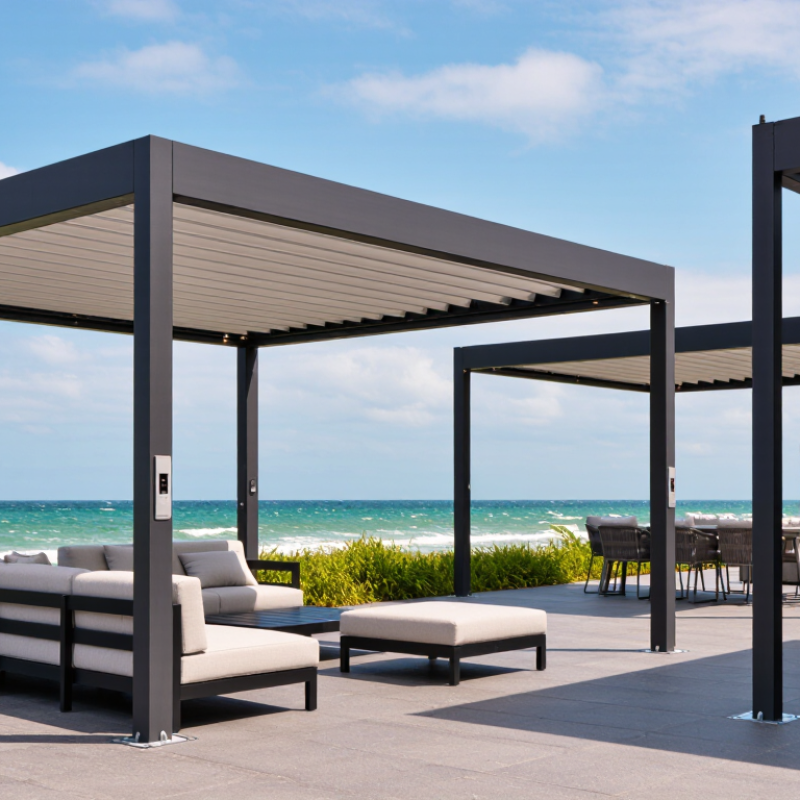
10 Best Aluminum Pergola Suppliers Worldwide
The aluminum pergola market depends heavily on reliable extrusion supply. Most architectural pergola frames use 6063-T5 profiles because they offer clean surfaces, practical strength, and good corrosion resistance. The International Aluminium Institute reported approximately 70.6 million tonnes of global primary aluminum production in 2023. This scale supports broad sourcing, but it does not guarantee consistent profile quality.
Profile control matters more than catalogue appearance. Suppliers should provide alloy certificates, temper records, dimensional tolerances, and coating test results. ASTM B221 and EN 755 are useful references for aluminum extrusions. A serious supplier can also explain wall thickness, drainage design, fastener compatibility, and wind-load assumptions. Thin sections may reduce cost. They may also reduce rigidity.
According to Grand View Research, the global aluminum extrusion market continues expanding through construction and transportation demand. That trend creates better availability for 6063-T5 profiles, yet energy prices and regional processing capacity still affect lead times. Powder coating quality deserves close inspection. Ask for coating thickness, color consistency, and accelerated-weathering evidence. Small samples can mislead. I would request finished corner joints, not only bare profile pieces, before approving a supplier. Some sourcing decisions still rely too much on attractive renders and too little on tested assemblies.
Aluminum Pergola Industry Scope: 6063-T5 Profiles and Global Supply
The chart compares calculated theoretical mass for rectangular hollow aluminum profiles commonly considered for pergola posts, beams, and rafters. Values use a 6063-T5 aluminum density of 2.70 g/cm³ and nominal dimensions, excluding corner radii, surface finishes, and manufacturing tolerances.
Calculation basis: profile area = outer area − inner area; theoretical mass = profile area × 0.00270 kg/m.
10 Best Aluminum Pergola Suppliers Worldwide
A serious supplier evaluation starts with verified wind performance, not attractive renderings. EN 13561 classifies wind resistance, where applicable, from Class 0 to Class 3. Class 3 corresponds to approximately 110 N/m² and 49 km/h under the standard’s test conditions. Those figures are useful, but they are not a complete structural design. The European Commission’s Eurocodes framework directs engineers toward EN 1991-1-4 for site wind actions. Local exposure, building height, terrain, and anchoring can change the result sharply.
Roof loads need separate attention. EN 1991-1-3 addresses snow actions, including drifting and uneven accumulation. A supplier should provide declared roof capacity in kN/m², test details, span limits, and connection drawings. “Heavy-duty” is not a measurement. The World Meteorological Organization reported 2024 as the warmest year recorded, at about 1.55°C above the pre-industrial average. That does not automatically raise a pergola’s design load, but it supports more careful climate and drainage reviews. A certificate alone may still leave gaps.
Tips: Request project-specific calculations, not only a laboratory label. Check whether EN 13561 actually covers the selected roof system. Confirm aluminum alloy, post dimensions, fastener grades, foundation depth, and drainage paths. Ask for test dates and independent verification. I would also inspect a completed installation in a comparable coastal or snowy location. Paperwork can look perfect. Site workmanship sometimes does not.
The ten best worldwide aluminum pergola suppliers should be judged by products, markets, and verified certifications.
A practical review should examine louvered roofs, retractable canopies, fixed systems, screens, drainage, and motor controls. I also check alloy grades, coating thickness, wind-load testing, spare-part availability, and installation manuals.
Small details matter.
Market coverage reveals useful differences. Suppliers serving Europe often provide CE documentation and powder-coating evidence. North American projects may require testing aligned with AAMA 2604 or AAMA 2605. Several manufacturers support Gulf, Asian, and Australian climates with corrosion-resistant finishes and engineered drainage. The International Aluminium Institute reported global primary aluminium production above 70 million tonnes in 2023. That scale supports supply, but it does not guarantee pergola quality. Aluminium sourcing remains only one part of the assessment.
Certification evidence needs careful reading.
ISO 9001 can indicate controlled processes, while ISO 14001 supports environmental management. The ISO Survey has recorded more than one million ISO 9001 certificates globally, showing its broad adoption. It is useful, but not product-specific.
Stronger suppliers provide project calculations, test reports, warranty terms, and traceability for fasteners and motors. I would also look for Qualicoat approval where applicable.
The ranking is not flawless. Regional building codes, coastal exposure, and installer skill can change the result. A beautiful showroom sample may hide weak drainage or limited after-sales support. Always request recent documents and a completed project reference before ordering.
When comparing the 10 best aluminum pergola suppliers worldwide, I look beyond polished catalog photos. Powder coating deserves close inspection. A reliable supplier should state the coating type, film thickness, color stability, and preparation process. Ask for a physical sample. Run a fingernail across its edge. Uneven texture or thin coverage may reveal weak finishing control. Coastal projects need stronger resistance to salt and humidity. Even premium coating can scratch during transport, so packaging matters too.
Drainage design often separates a durable pergola from a troublesome one. Water should travel through concealed channels, not drip across furniture or doorways. I check gutter joints, outlet positions, and access points for cleaning. Small leaves can block narrow passages. Automation also needs practical testing. Motors should move the louvers smoothly and stop safely when resistance appears. Confirm remote controls, sensors, manual operation, and replacement-part availability. Smart functions are attractive, but complicated systems can create unnecessary repair delays.
Warranty terms require careful reading. Look for separate coverage periods for the frame, coating, motor, and accessories. A clear claims process is more useful than impressive wording. Ask who pays shipping and whether local technical support exists. Supplier experience matters, but published laboratory data should support major performance claims. No comparison is perfect. I once trusted a strong warranty until installation exclusions appeared in small print. That mistake changed my checklist. Request installation guidance, maintenance schedules, and written answers before placing an order.
When comparing the 10 best aluminum pergola suppliers worldwide, pricing deserves more than a single headline figure. Ask whether the quote includes posts, louvers, drainage, fasteners, packaging, shipping, and installation. A low price may exclude foundation work or weatherproof electrical components. Request a line-by-line quotation.
Lead times often range from six to fourteen weeks, depending on engineering, production, customs, and site conditions. Confirm the date for approved drawings, not only the order date. Customization may include roof dimensions, integrated lighting, screens, heating, colors, and coastal-grade finishes. Check the aluminum alloy, powder-coating process, and hardware corrosion resistance. Details matter.
Installation standards should match the project location. The supplier should provide structural calculations for local wind, snow, and rain loads. Ask for anchoring details, drainage slopes, wiring routes, and maintenance access. A qualified local installer should verify the ground, foundations, and permitting requirements. Do not assume a patio slab is strong enough. That mistake can become expensive.
A dependable supplier shares technical drawings, warranty conditions, inspection records, and clear after-sales procedures. Check references with similar climates, especially projects exposed to salt air or heavy snow. I would also question vague delivery promises. They sound reassuring, but they rarely solve delays. Allow extra time for revisions and site preparation. That small buffer may protect the entire schedule.