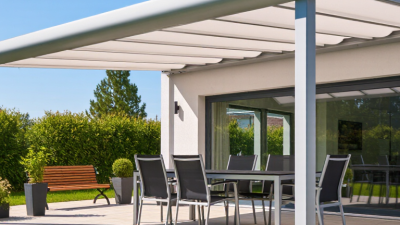
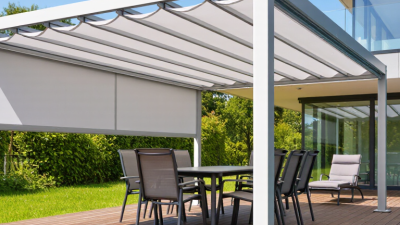
China Top PVC Awning Pergola Manufacturers for Global Buyers
Choosing a reliable China supplier requires more than comparing prices or browsing polished product photos. A Pvc Awning Pergola must perform under sunlight, rain, wind, and repeated movement. Global buyers should examine frame thickness, PVC fabric quality, drainage design, motor performance, and replacement-part availability. Factory experience matters. So does communication.
Outdoor-living product consultant Lena Chen observes, “A pergola succeeds when its materials match the climate, not merely the catalogue.” This practical view deserves attention. A coastal project may need stronger corrosion protection. A hot region may require tested UV resistance. Heavy rainfall demands clear water paths and carefully sealed joints. Small details matter.
This guide introduces leading Chinese Pvc Awning Pergola manufacturers for international buyers. It considers production capacity, customization, quality control, export experience, and technical support. Factory audits, sample inspections, and documented testing can reveal more than attractive promises. Buyers should also confirm packaging methods, installation guidance, warranty terms, and delivery records.
No supplier is perfect. Even experienced manufacturers can overlook a fitting detail or underestimate local weather. That is why careful questions remain essential. Ask for material specifications. Request real project evidence. Compare samples under practical conditions. A lower quotation may become expensive when spare parts, installation delays, or inconsistent color appear later. The manufacturers discussed here offer useful starting points, but responsible selection still depends on verification, clear contracts, and realistic performance expectations.
PVC Awning Pergola Basics: 500–650 g/m² Fabric and UV-Stable Coatings
For global buyers comparing PVC awning pergola manufacturers in China, fabric weight is a practical starting point.
A 500–650 g/m² PVC-coated fabric usually balances tensile strength, handling, and weather resistance. It feels substantial without becoming unnecessarily rigid. However, fabric weight alone proves little. Two rolls with the same weight can perform differently under sunlight, rain, and repeated folding. During site inspections, I check surface finish, edge welding, and reinforcement around eyelets. Small details matter.
A UV-stable coating helps slow fading, embrittlement, and surface cracking.
Ask for coating composition, test methods, and documented outdoor-aging results. Do not accept “UV resistant” as a complete specification. Clarify whether protection is built into the PVC layer or added as a surface treatment. The difference affects durability and maintenance. A pale sample may still heat significantly under direct sun. Ventilation beneath the canopy remains important.
For pergolas near coasts, request corrosion-compatible fasteners and sealed seams.
In humid regions, inspect drainage paths and mildew-control practices. I have seen excellent fabric fail because water stayed in a low corner. That was an installation issue, not a material miracle. Buyers should compare roll width, finished tolerance, warranty terms, and replacement procedures. Independent sample testing is wise. It costs time. It can expose weak stitching before shipment. No coating lasts forever, so suppliers should explain realistic service conditions instead of promising permanent performance.
Ranking China Manufacturers by ISO 9001, EN 13561, and Factory Capacity
China Top PVC Awning Pergola Manufacturers for Global Buyers
A practical ranking should begin with verified compliance, not attractive catalog images. Manufacturers holding a valid ISO 9001 certificate deserve early consideration because documented processes support consistent purchasing and quality control. However, ISO 9001 does not prove awning performance. Buyers should also request test reports or declarations related to EN 13561, including wind resistance, operating safety, and durability.
The highest-ranked factories usually combine both standards with measurable production capacity. Look for in-house cutting, welding, coating, and final assembly areas. A factory producing 10,000 complete units monthly may offer stronger scheduling than a smaller workshop. Yet capacity figures need checking. Ask for recent production records, shift numbers, equipment lists, and photographs showing active production lines. Empty machinery proves little.
Medium-ranked suppliers may have capable engineers and flexible customization, but their certification scope can be limited. Confirm whether ISO 9001 covers the actual manufacturing site and product category. Check certificate numbers, issuing bodies, validity dates, and test sample details. Factory audits should review incoming PVC fabric, aluminum profiles, motors, packaging, and final inspection records. Small details matter. I would also examine complaint handling and replacement procedures, because a polished first shipment can hide weak after-sales control. This ranking is useful, but not flawless; factory capacity changes with seasonal orders, labor turnover, and subcontracting.
Comparing Roof Systems, Wind Classes 1–3, and 5–10-Year Warranties
China Top PVC Awning Pergola Manufacturers for Global Buyers
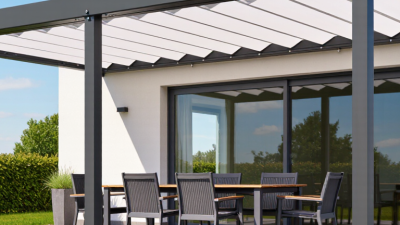
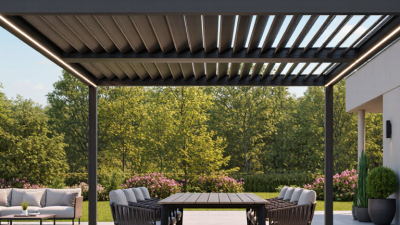
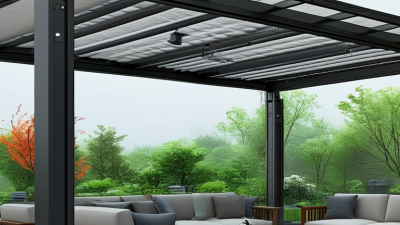
When comparing PVC awning pergolas, the roof system deserves close inspection. Retractable roofs offer flexible shade, while fixed or louvered designs provide steadier coverage. A well-built system should drain rainwater through shaped channels, not across the seating area. Check fabric tension, corner seals, motor protection, and replacement-part access. Details matter. Not every roof fits every climate.
Wind Classes 1–3 indicate different resistance levels, but testing methods can vary by market. Ask for test reports, permitted wind speeds, installation conditions, and anchoring requirements. Class 1 may suit sheltered gardens. Class 2 can serve more exposed residential sites. Class 3 requires stronger frames and carefully engineered foundations. A higher class does not excuse poor installation. In project reviews, loose anchors often caused more trouble than the roof material itself.
Warranty periods commonly range from five to ten years. Read the exclusions carefully. Coverage may separate PVC fabric, aluminum frames, motors, coatings, and drainage parts. A long warranty sounds reassuring, yet response time and spare-part availability matter more during a rainy season. Ask who handles inspections and how claims are documented. One honest caution remains: published wind ratings may not reflect unusual buildings or coastal turbulence. Local engineering review is still worth the cost.
Evaluating Global Supply: MOQ, 30–60-Day Lead Times, and Incoterms
China Top PVC Awning Pergola Manufacturers for Global Buyers
For global buyers, supplier evaluation starts with a clear minimum order quantity. A dependable manufacturer should define MOQ by size, fabric color, frame finish, and customization level. Standard PVC awning pergolas may require 10–50 sets, while custom orders often require more. Ask whether mixed models can share one MOQ. Small details matter. Request a physical sample, material specification, and packing photos before approving bulk production.
A quoted lead time of 30–60 days needs careful checking. Confirm when the clock starts: deposit receipt, drawing approval, or material confirmation. Production may also depend on PVC film availability, aluminum cutting, hardware supply, and peak-season capacity. Ask for a milestone schedule with dates for fabrication, quality inspection, and container loading. A pre-shipment inspection can verify dimensions, stitching, drainage design, and packaging strength. Even with planning, delays can happen. I would not treat a promised date as a guarantee.
Incoterms can change the real landed cost. Under EXW, the buyer usually manages inland collection and export arrangements. FOB may offer clearer control before ocean shipment, while CIF can simplify freight booking but may limit carrier choice. DDP appears convenient, yet duties, taxes, and local delivery responsibilities must be confirmed with a qualified customs broker. Compare quotations on the same Incoterm, currency, port, insurance scope, and payment schedule. Many purchasing mistakes begin with a cheap price that excludes essential costs.
China PVC Awning Pergola Supply Benchmarks for Global Buyers
Indicative procurement benchmarks for standard, motorized, and custom PVC awning pergola orders. Actual MOQ, lead time, and delivery terms vary by specification, season, and destination.
Buyers should generally allow 30–60 days for production after technical approval and deposit confirmation. FOB and CIF are commonly compared during supplier evaluation; the final Incoterm should reflect the buyer’s control over freight, insurance, customs clearance, and inland delivery.
Verifying Compliance: CE Marking, Flame Ratings, Drainage, and Load Tests
For global buyers, compliance should be checked before comparing prices or fabric colors. A CE mark is not proof of every safety requirement. Confirm whether the complete PVC awning pergola falls under applicable European rules. Request the declaration of conformity, technical file references, and testing laboratory details. The documents should match the exact frame, roof, fittings, and motor configuration.
Flame performance needs equal attention. Ask for the tested fabric classification, test method, and product thickness. A certificate for another material is not enough. Check whether the rating suits the installation country and intended building use. Suppliers should explain test conditions clearly, including ignition time and flame spread. Vague claims deserve a second question.
Rainwater behavior is visible during inspection. Water should move toward planned gutters, not collect near joints or posts. Pouring water across the roof can reveal weak slopes and blocked outlets. Load testing should cover wind, snow, and connection points. Request test loads, deformation results, safety factors, and anchoring assumptions. Site conditions may differ greatly. That matters.
Experienced manufacturers normally provide drawings, installation limits, inspection records, and replacement guidance. Still, paperwork can hide gaps. I would verify serial numbers against test reports and inspect one production sample. A perfect document set does not guarantee perfect installation. Small omissions, especially around drainage and anchors, can become expensive failures.