Leave Your Message
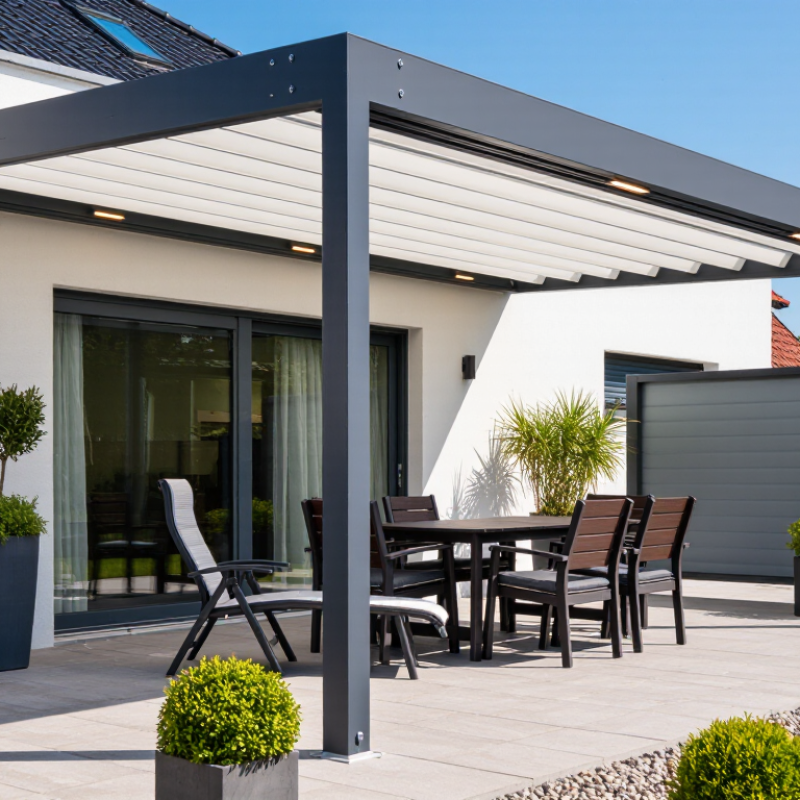
Choosing a Modern Aluminium Pergola can transform a bare patio into a cooler, more useful outdoor room. However, attractive images often hide practical details. Frame strength, roof movement, drainage, installation quality, and local weather exposure deserve careful attention. A slim profile may look elegant, yet it can perform poorly under strong wind or heavy rain.
Outdoor-living designer Paul Bangay says, “Outdoor spaces should respond to climate, not simply follow fashion.” This principle gives the buying process a useful direction. Consider where the sun reaches your patio at noon. Watch how water moves after a storm. Check whether nearby doors, lights, and plants will remain accessible. These small observations often matter more than showroom colour samples.
This guide introduces ten practical Modern Aluminium Pergola buying tips. It examines aluminium grades, powder coatings, louvre control, drainage channels, warranty terms, and installer experience. It also explains why integrated lighting and screens should be planned early. Retrofitting them later can create visible wiring and unnecessary costs. Some buyers focus too heavily on the lowest quote. That choice may feel sensible today, but weak hardware can become expensive quickly. I have seen impressive pergolas lose their appeal because rainwater collected beside the house. No product is perfect. Even a well-designed structure needs cleaning, inspection, and realistic expectations. Use these tips to compare specifications carefully, question confident claims, and select a pergola suited to your space, climate, and daily habits.
10 Modern Aluminium Pergola Buying Tips?
Define Your Pergola’s Purpose, Location, and Required Size
Start with the activity, not the frame. Will the pergola shelter dining, lounge seating, or a compact barbecue area? The AIA’s Q4 2023 Home Design Trends Survey reported that 69% of architecture firms saw rising demand for outdoor living spaces. That demand makes planning more important, not less.
Measure the usable area carefully. Leave at least 900 millimetres behind dining chairs for movement. A four-seat table usually needs about 3 by 3.5 metres, including circulation. For a lounge setting, 3 by 4 metres feels more practical. These dimensions are starting points, not rules. I have seen homeowners choose attractive structures that later block doors or dominate narrow patios.
Study the location at different times. Morning shade may become harsh afternoon glare. Check roof edges, drainage paths, nearby trees, and prevailing wind. A south-facing position often needs deeper shading in warm climates. The U.S. Department of Energy notes that exterior shading can reduce unwanted summer solar heat before it reaches windows. Aluminium suits exposed areas because it resists rot and requires limited maintenance. Still, poor anchoring can undermine any material. Review the surface, footing depth, and local wind requirements with a qualified installer. Leave room for lights, screens, and future furniture. Plans change. That is worth admitting.
| No. | Buying Dimension | Practical Question | Useful Planning Data | Recommended Decision |
|---|---|---|---|---|
| 1 | Define the primary purpose | Will the pergola be used for dining, lounging, cooking, shade, or a combination of activities? | A dining table and chairs need more clearance than a compact seating area. Outdoor kitchens also require ventilation, utility access, and safe separation from combustible materials. | List the furniture, appliances, and number of users before choosing the frame size. |
| 2 | Measure the available location | How much usable space is available after accounting for walls, doors, paths, drains, and property boundaries? | Measure length, width, and height in at least two places. Note permanent obstacles and allow room for doors and circulation. | Create a scaled sketch and check the proposed footprint against the actual paved or decked area. |
| 3 | Choose the required size | Will the pergola comfortably fit people and furniture without blocking movement? | Common residential footprints include approximately 3 × 3 m for compact seating, 3 × 4 m for dining, and 4 × 6 m for larger entertaining areas. | Add clearance around furniture rather than sizing the pergola to the furniture’s exact dimensions. |
| 4 | Consider sun direction | At what times of day and during which seasons is shade most important? | The sun’s angle changes throughout the day and year. Low-angle morning or evening sun can enter beneath a roof more easily than overhead midday sun. | Observe the site at different times or use a sun-path tool before selecting roof direction and screening. |
| 5 | Check local wind exposure | Is the installation near an exposed coast, open field, rooftop, or wind corridor? | Wind resistance depends on the complete system, including posts, beams, roof, fixings, and foundations—not just aluminium thickness. | Request structural wind information for the exact configuration and site conditions. |
| 6 | Review drainage and roof type | Where will rainwater go, and how much weather protection is required? | Louvred roofs can provide adjustable shade and ventilation. Fixed roofs generally provide more consistent rain protection but need planned drainage. | Confirm gutter, downpipe, and water-discharge positions before installation. |
| 7 | Verify foundation requirements | Can the existing surface safely support the posts and fixings? | Concrete slabs, pavers, soil, and timber decks require different anchoring methods. Hidden services may also restrict excavation. | Inspect the substrate and obtain engineering or installer guidance where loads or ground conditions are uncertain. |
| 8 | Compare aluminium construction | Are the frame sections, joints, and fasteners suitable for outdoor use? | Aluminium is naturally corrosion-resistant because it forms a protective oxide layer. Coating quality, wall thickness, joint design, and stainless or compatible fasteners still matter. | Ask for material specifications, coating details, and information about galvanic-corrosion prevention. |
| 9 | Plan lighting and utilities | Will you need lighting, heaters, fans, speakers, power, or water? | Cables, switches, outlets, and appliances must be rated for outdoor conditions and installed according to local electrical requirements. | Design service routes and access points before the frame and roof are assembled. |
| 10 | Confirm permits and maintenance | Are planning approval, building permits, or ongoing cleaning requirements applicable? | Requirements vary by location and may depend on size, height, setbacks, attachment to a building, and whether the structure is permanent. | Check local regulations, keep installation documents, and plan periodic cleaning and inspection of moving parts and fixings. |
Planning note: Final dimensions, foundations, wind resistance, electrical work, and permit requirements should be verified against local regulations and the site’s specific conditions.