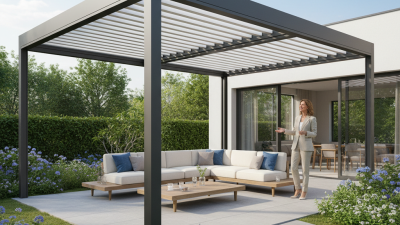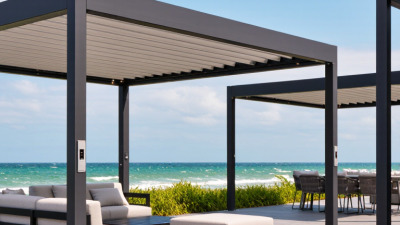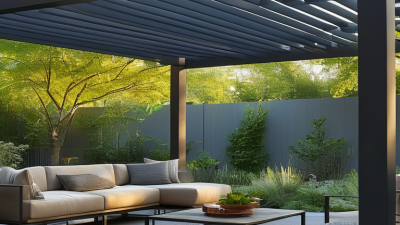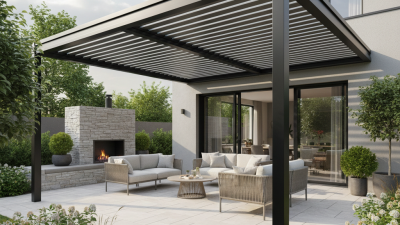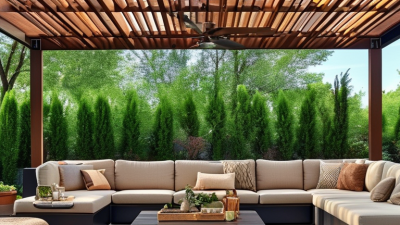
Choosing the right Aluminum Pergola manufacturer requires more than comparing attractive product photos. A reliable supplier must combine durable materials, accurate engineering, weather protection, and responsive after-sales support. This overview examines ten leading manufacturers worldwide through those practical standards. It considers aluminum alloy quality, powder-coating performance, drainage design, motorized louvers, customization, certifications, installation networks, and long-term maintenance.
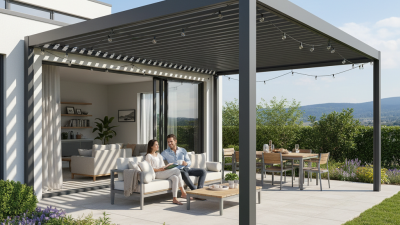
Paul Renson, a recognized figure in the outdoor-living industry, has said, “Outdoor living is an extension of the home.” That idea remains useful when evaluating an Aluminum Pergola. A well-designed structure should feel integrated, not added as an afterthought. Imagine standing beneath it during a sudden summer shower. Water should move through concealed gutters, while the louvers adjust smoothly above you. Small details matter.
Still, no ranking can fit every project. A coastal hotel needs stronger corrosion resistance than a private garden. A homeowner may value quiet motors, while a commercial buyer may prioritize warranties and global installation support. Some manufacturers communicate these differences clearly. Others leave important specifications difficult to verify. That weakness deserves attention.
The manufacturers selected here are assessed with a practical, evidence-focused approach. Product documentation, material claims, design flexibility, customer experience, and market reputation all influence the comparison. Prices and availability can also change by region. Therefore, readers should confirm local compliance, installation conditions, and warranty terms before purchasing. A beautiful pergola is not automatically a dependable one.
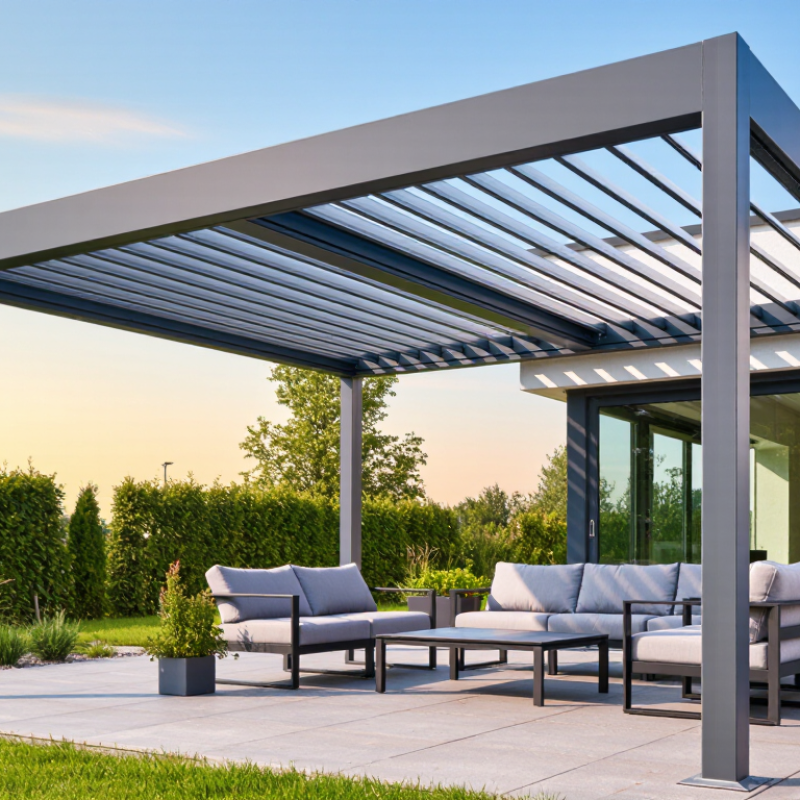
What Makes an Aluminum Pergola Manufacturer Stand Out Worldwide
The best aluminum pergola manufacturers compete through engineering, not attractive catalog images. The International Aluminium Institute reports that recycling aluminum uses about 5% of the energy required for primary production. Therefore, strong manufacturers should disclose recycled content, alloy grades, and responsible sourcing. Traceability matters when a roof panel arrives with a different finish.
Durability requires measurable evidence. Manufacturers should specify wind-load ratings, drainage capacity, coating performance, and connection details. Standards such as ASTM B221 help verify extruded aluminum profiles, while AAMA coating classifications support more reliable finish comparisons. A serious supplier also provides installation drawings, corrosion guidance, and replacement-part access. Small details matter. Ask for test documents, not promises.
Experience appears during difficult installations. Uneven paving, coastal moisture, snow loads, and limited access can expose weak design decisions. Manufacturers with international projects should explain how their systems adapt to local conditions and building requirements. Warranty language deserves close reading; exclusions may matter more than the headline period. A polished brochure proves little. Even experienced manufacturers can underestimate drainage noise, thermal movement, or installer skill. That weakness should be acknowledged and corrected through field feedback, quality audits, and documented design revisions.
Editorial benchmark for creating a global top-10 shortlist. The percentages show the relative importance of each evaluation criterion, not ratings for individual companies.
Structural engineering and weather resistance receive the highest weights because they directly affect safety, durability, and long-term outdoor performance. Customization, quality control, installation support, warranty coverage, and sustainability complete the broader manufacturer evaluation.
Choosing among the 10 best aluminum pergola manufacturers worldwide requires more than comparing photos. Real evaluation starts with the structure, not the brochure. Ask how the aluminum is alloyed, treated, and tested before assembly. Powder coating should resist fading, moisture, and coastal salt. Request coating standards, load calculations, and corrosion-test records. Details matter.
An experienced manufacturer should explain beam thickness, drainage paths, fasteners, and moving-part tolerances. Ask for installation drawings that match your climate and intended span. Wind ratings must come from testing or defensible engineering, not sales language. Check whether replacement louvers, motors, seals, and touch-up materials remain available. Support after delivery often reveals more than the initial quotation.
Reliability also depends on communication. Can the factory provide traceable batch information, inspection photos, and a written warranty? The warranty should define coverage, exclusions, response times, and maintenance duties. Look for independent certifications, transparent factory details, and verifiable project references. Websites can mislead. A factory visit, when possible, may reveal inconsistent welding, uneven coating, or poor packaging. I have seen how a perfect sample can hide production variation. Inspect a corner joint, hinge, and drainage outlet before approving a large order. Small flaws matter. Honest answers are essential when corrections become necessary.
The strongest profiles share practical habits. They provide installation manuals, sample finishes, maintenance guidance, and clear warranty limits.
Factory quality checks should include coating adhesion, water flow, actuator cycles, and frame alignment.
Independent testing adds credibility, but published figures still need local verification.
A wind rating may change after poor anchoring or uneven ground. That detail is easy to overlook.
Experience also exposes weaknesses. Some manufacturers offer beautiful louvers but limited after-sales support.
Others publish impressive specifications without explaining testing conditions.
Buyers should request project references, service contacts, and written load assumptions.
The best choice depends on climate, building codes, budget, and installer skill—not appearance alone.
10 Best Aluminum Pergola Manufacturers Worldwide?
Comparing global aluminum pergola manufacturers requires more than attractive renderings. Product performance begins with alloy selection, coating durability, drainage design, and connection strength. In coastal regions, powder coating and stainless-steel fasteners need careful compatibility checks. In colder climates, installers should review snow-load calculations and wind ratings. A serious manufacturer provides test data, installation drawings, and clear maintenance instructions. Marketing language alone is not evidence.
Customization separates practical suppliers from catalogue sellers. Buyers may need adjustable louvers, integrated lighting, screens, heaters, or concealed gutters. Good manufacturers adapt column sizes, roof spans, colors, and control systems without weakening the structure. Ask for shop drawings before production. They reveal awkward posts, poor water routes, and access problems early. Fit matters. Small details matter more than expected.
Global service also affects the real cost. Reliable suppliers explain lead times, packaging methods, replacement-part availability, and local installation support. They should respond clearly when a component arrives damaged or a motor needs adjustment. Warranty terms must identify coverage, exclusions, and response procedures. However, no supplier is perfect. Some impressive systems have limited regional support, while some less polished companies provide stronger technical guidance. I would compare documented projects, installer feedback, and sample finishes before choosing. A factory video is useful, but it cannot replace evidence from a pergola facing years of sun, rain, and daily use.
Choosing an aluminum pergola manufacturer requires more than comparing glossy photographs. Define your site conditions first: local wind speed, snow load, drainage, sun exposure, and installation access. ASCE 7-22 provides location-based design loads, but some suppliers only quote standard dimensions. That is a warning sign.
Ask for alloy details, wall thickness, coating specifications, and engineering drawings. Aluminum profiles meeting ASTM B221 requirements can offer more predictable strength and finish quality. For painted surfaces, AAMA 2604 or 2605 coatings generally provide stronger weathering performance than basic 2603 systems. The difference may appear small on paper. It becomes visible after several summers.
Independent evidence matters. Request structural calculations, water-management details, corrosion-testing information, and project references from similar climates. The 2024 Houzz & Home Study shows that outdoor improvement budgets vary widely by project scope, location, and material choices. Therefore, a low initial quote does not prove better value. Compare the complete installed cost, including foundations, wiring, screens, drainage, delivery, and maintenance.
Inspect warranty exclusions carefully. Does coverage include coating fade, corrosion, motors, fasteners, and installation labor? Ask who handles service after installation. A reliable manufacturer should provide measurable response times, replacement-part availability, and clear maintenance instructions. I would also request a physical finish sample. Online colors can mislead. One overlooked issue is thermal movement around large roofs, especially near walls and glass doors. Even experienced buyers miss it sometimes. The best choice balances tested performance, local engineering support, realistic lead times, and transparent documentation.
| Rank | Manufacturer Profile | Best Use Case | Aluminum Specification to Require | Finish Standard | Structural Evidence | Customization Range | Typical Project Fit | Key Selection Check |
|---|---|---|---|---|---|---|---|---|
| 1 | Premium Architectural Supplier | High-end residential and hospitality projects | 6063-T5 or 6063-T6 extruded aluminum; engineering calculations required | AAMA 2605 powder coating or equivalent high-performance coating | Stamped drawings and ASTM E330 or equivalent load-test documentation | Very high: custom dimensions, louvers, lighting, screens, and drainage | Large custom installations | Confirm design loads, local-code compliance, and installation responsibility |
| 2 | Commercial Project Manufacturer | Restaurants, hotels, retail, and public spaces | 6063-T5/T6 profiles with documented alloy and wall thickness | AAMA 2604 minimum for demanding exterior applications | Project-specific wind, snow, and anchoring calculations | High: modular bays, motorized roofs, glazing, and fixed screens | Medium to large commercial projects | Request references for similar building types and completed project sizes |
| 3 | Coastal-Climate Specialist | Properties exposed to salt spray and high humidity | Marine-suitable aluminum alloy with isolated stainless-steel hardware | Pretreatment plus AAMA 2604 or AAMA 2605 powder coating | Corrosion-test evidence such as ISO 9227 or ASTM B117 results | Medium to high: corrosion-resistant fasteners, screens, and drainage options | Seaside homes and resorts | Check galvanic-corrosion prevention between aluminum and other metals |
| 4 | Motorized Louver Specialist | Automatic shade, ventilation, and rain control | Extruded aluminum louvers with corrosion-resistant moving components | Exterior-grade powder coating with documented color durability | Water-drainage tests, wind-load data, and motor safety documentation | High: sensors, remote controls, rain detection, and integrated lighting | Residential patios and outdoor dining areas | Verify power requirements, manual override, drainage, and spare-parts support |
| 5 | Modular DIY-Oriented Supplier | Homeowners seeking simplified installation | Clearly specified 6063 aluminum profiles and published component sizes | Standard outdoor powder coating with maintenance instructions | Assembly instructions, anchoring details, and published span limits | Medium: standard sizes, adjustable posts, and accessory packages | Small and medium residential patios | Confirm whether permits, concrete footings, and professional assembly are required |
| 6 | Fast-Delivery Stock Manufacturer | Standard projects with tight completion schedules | Published profile dimensions, alloy designation, and maximum spans | Consistent factory-applied powder coating | Product test data and standard installation drawings | Low to medium: limited colors and fixed configurations | Replacement projects and routine residential builds | Obtain written stock confirmation, dispatch timing, and delivery damage terms |
| 7 | Sustainable Production Supplier | Projects with environmental procurement requirements | Recycled-content declaration and traceable aluminum sourcing | Low-VOC powder coating with documented pretreatment process | Environmental product data, quality-control records, and relevant certifications | Medium: configurable profiles and recyclable components | Green building and public-sector projects | Ask for recycled-content percentages and whether claims are independently verified |
| 8 | Integrated Outdoor-Living Supplier | Complete outdoor rooms and entertainment areas | Aluminum structure engineered for compatible screens, glass, and lighting | Exterior powder coating matched across accessories | Integrated drainage, electrical-routing, and attachment documentation | Very high: shades, screens, heaters, lighting, and privacy panels | Luxury residential and hospitality spaces | Clarify which components are included and who coordinates subcontractors |
| 9 | Distributor-Supported Manufacturer | Buyers who need local sales and service support | Documented alloy, profile thickness, hardware grade, and system tolerances | Published coating specification and touch-up procedure | Local engineering review and code-compliant installation documents | Medium: options depend on distributor inventory | Projects requiring local warranty handling | Confirm local inventory, service coverage, warranty exclusions, and replacement-part access |
| 10 | Bespoke Engineering Manufacturer | Unusual dimensions, difficult sites, and one-off designs | Profile selection based on site-specific structural calculations | Coating selected for exposure category and expected service life | Signed engineering package, connection details, and site survey | Maximum: custom geometry, unusual spans, and integrated structures | Complex residential and commercial developments | Evaluate engineering capability separately from product appearance and price |
Buyer note: The specifications shown are selection benchmarks rather than claims about any unnamed supplier. Always request current technical datasheets, structural calculations, coating documentation, warranty terms, installation instructions, and references for comparable projects before placing an order.